
A conversation with author canan yetmen
I had the distinct privilege of chatting with author Canan Yetmen about her newest novel The Pretense of Memory. This was such a delight in part because I’ve been lucky enough to read earlier drafts of this work and talk one-on-one with Canan as she revised.
Pretense is a sequel to the Anna Klein Trilogy, books inspired by Canan’s own family and their circumstances at the end of World War II. I’m always fascinated by an author who works with the same set of characters over the course of several novels—you could easily assume that it’s all familiar territory, but as Canan shares in our conversation, the beautiful thing about fictional characters is their ability to keep surprising you.
So what’s this latest novel about?
In a nation eager to forget, one young man dares to remember, risking everything to make the truth impossible to ignore. In West Germany in 1958, the post-war miracle economy is booming and everyone seems to have forgotten — or misremembered — the crimes of the Third Reich entirely. But Oskar Gruenewald hasn’t…
Intrigued? I thought so. Get your copy here.
Our convo…
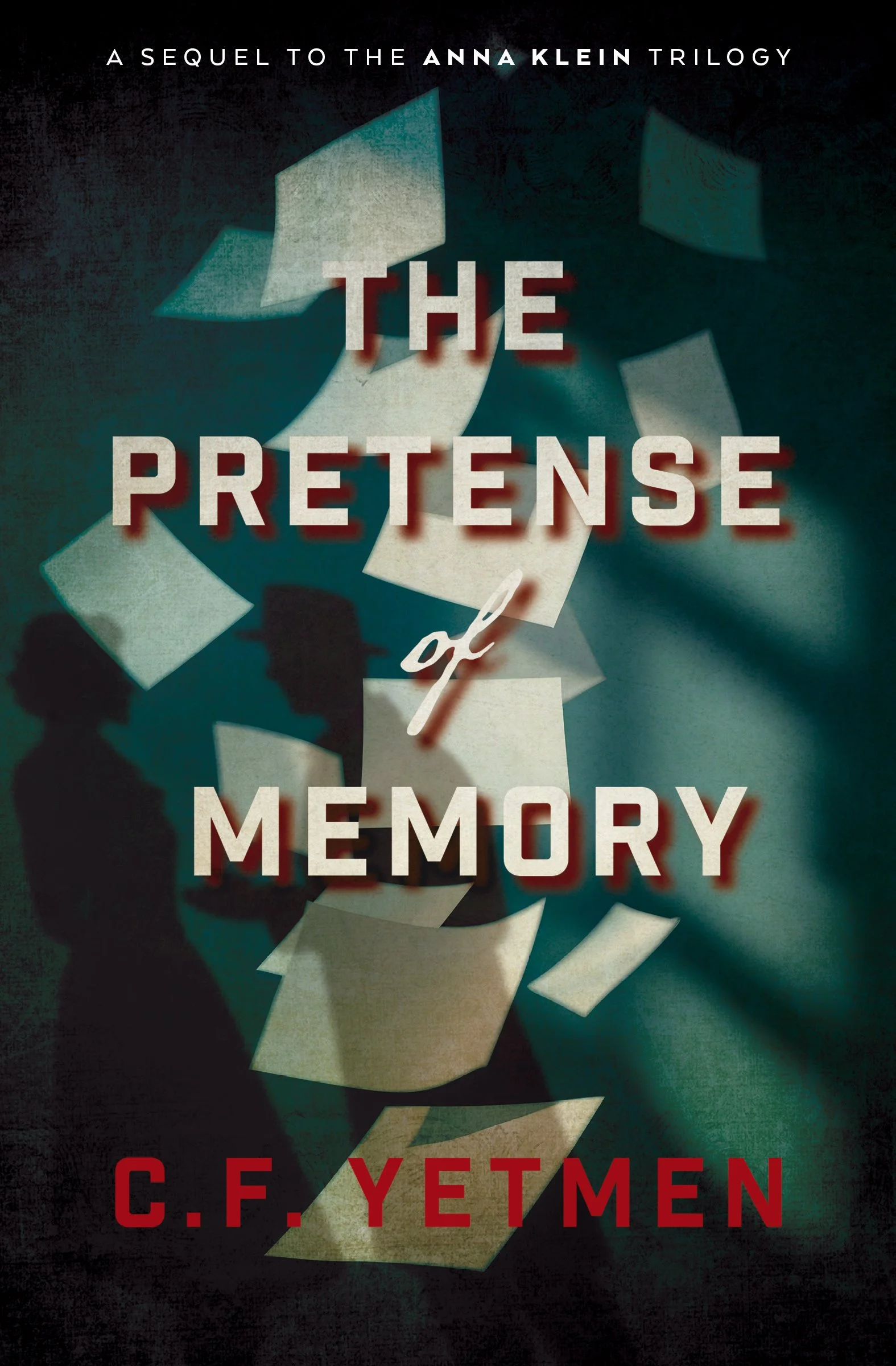
You can read a sample of Canan’s new novel here!
CLAIRE: Canan, congrats on The Pretense of Memory! What a joy to have an early copy in my hands. How does it feel to finish a book? In particular, how did it feel to wrap Pretense?
CANAN: Thank you, Claire. It’s a joy to see the book in your hands, since you carried me through the trenches of this project for, what? Four years? Yikes. It feels surreal because this plot gave me so much trouble that there were days—entire weeks, even— where I wanted to walk away from writing altogether, but then the thought of not writing was actually worse. So I guess it’s relief laced with the usual anxiety and also surrender because it’s literally out of my hands now.
CLAIRE: YES! And what you said about process really resonates. What do you do when you want to walk away from writing? How do you reunite with a project (or your process) when you realize the prospect of not writing is, in fact, so much worse? We could always use more ideas for this, HA!
CANAN: Well, this is where you came to the rescue. I had a real sense that giving up would not just be embarrassing but would let you and the Blue Stones down in some way. Plus if I wasn’t going to write/stress about writing, what on Earth would I do instead? So, I felt sort of obligated to see it through, and our meetings, the prompts you created, and conversations with you and other writers really helped. Being in community was essential. Even if I was writing absolute garbage in those sessions, I was at least writing. And often I’d come back to that stuff and see it was less garbage-y than I first thought.
CLAIRE: This is beautiful—thank you! And I am right there with you in that I would get absolutely nowhere without community. It’s so important when you plan on selling your work to establish community first—people who want to write (perhaps sell/share/perform eventually, but first and foremost—to make, to remind us of the daily work we love).
And this brings me to your main character [no spoilers, future readers, promise!]. For Oskar, community is a complicated thing, to say the least. The system has abandoned him, a found family has saved him, and now he has to carve out his own identity, and therefore community, all over again. What was challenging about connecting with Oskar, and how are you grateful to him and his journey (as a writer and truthseeker yourself!)?
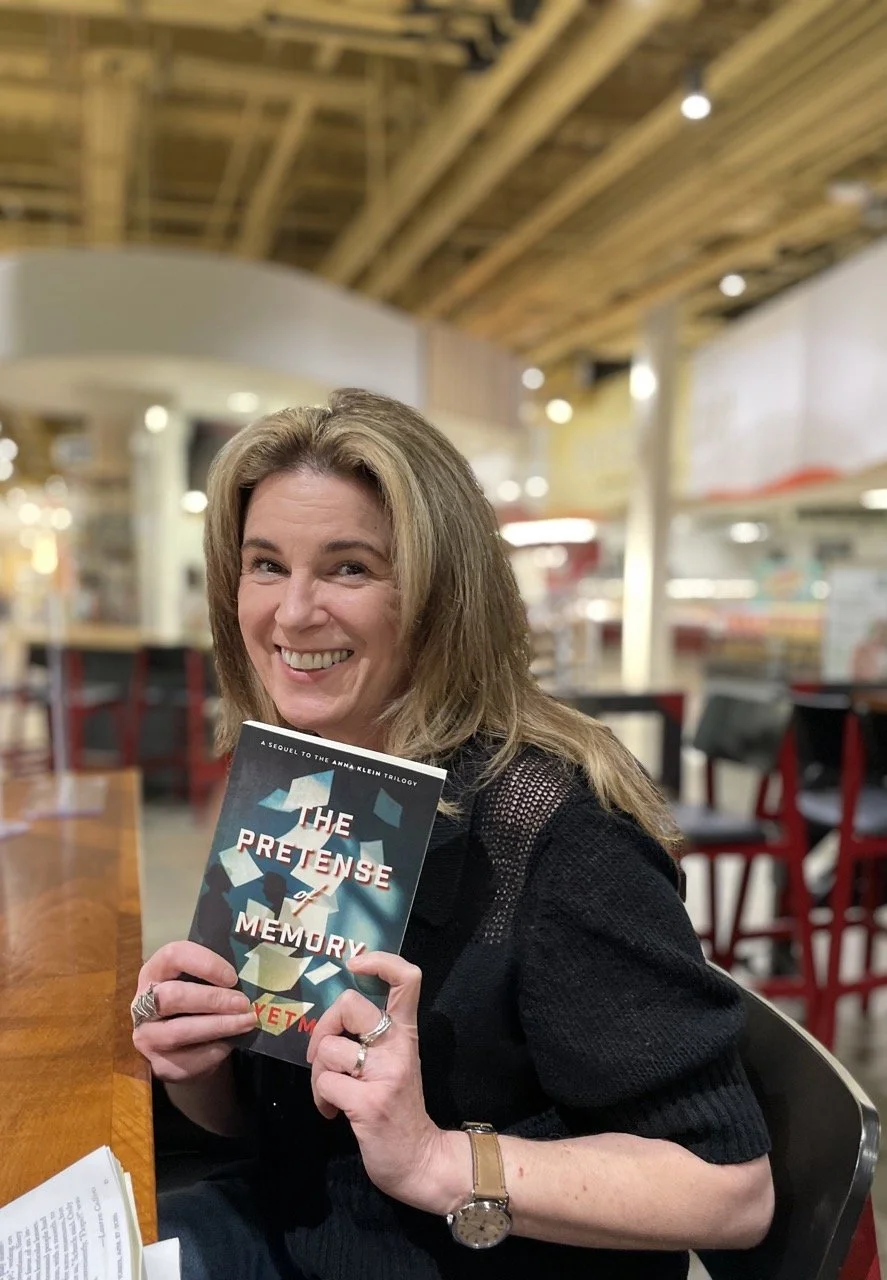
The author signing my copy!
CANAN: This a great question because Oskar popped up, unbidden as a character in my first book, more than ten years ago. He was eight years old and thought the book was about him. So I’ve known him a long time, and I knew he had something to say. But it was also like trying to control one of your actual children. I knew Oskar had to deal with his trauma and identity issues, but I kept pushing him into the wrong situations and making him do things he would never do.
In the end, I had to just let him lead the way, which was scarier for me, but it let him be himself.
I think the challenge was letting him go. How’s that for a parenting metaphor? I’m just grateful that he trusted me to write his story. I am fully aware that sounds slightly bonkers but it’s true!
CLAIRE: Doesn’t sound slightly bonkers to me. Or maybe it does, and is therefore affirming, HA! And as someone who got to know Oskar through your own revision work, I have to say what a privilege it was to see him evolve, and to hear you say that you learned to let him lead the way. I am trying to do this myself with a novel in its early stages and will take a leaf out of your book (and Oskar’s) for my own process.
Speaking of new projects, last question, I know you’re working on your next novel. What are you enjoying so far about this new work?
CANAN: Yeah, you and I both know Oskar very well at this point! As far as the next book goes, I’m enjoying playing with two timelines, one set in 1989 and one in 1963, so at opposite ends of the Cold War. As a Gen Xer, this brings up a lot of wistful nostalgia, as weird as that sounds. I mean, it was the cultural and political framework of my childhood and I just love a good Cold War spy story. So I’m loving the research and all the actual memories it’s sparking. I guess I’m now old enough to write historical fiction from memory? Anyway, I love all the possibilities that this moment in the process carries and I’m so excited to share this project with you from the ground up this time!
CLAIRE: OMG, I can’t wait to read more (and to see what these characters get up to)! I know you can’t wait to find that out as well. Cheers to the endless discovery that is novel-writing, and the community that inspires us to keep going.