Prepare to get ready to really get writing.
Writing Prompts

the butterfly / rose, weightless, in the wind. / "Don't love your life / too much," it said, / and vanished / into the world. —Mary Oliver, “One or Two Things”
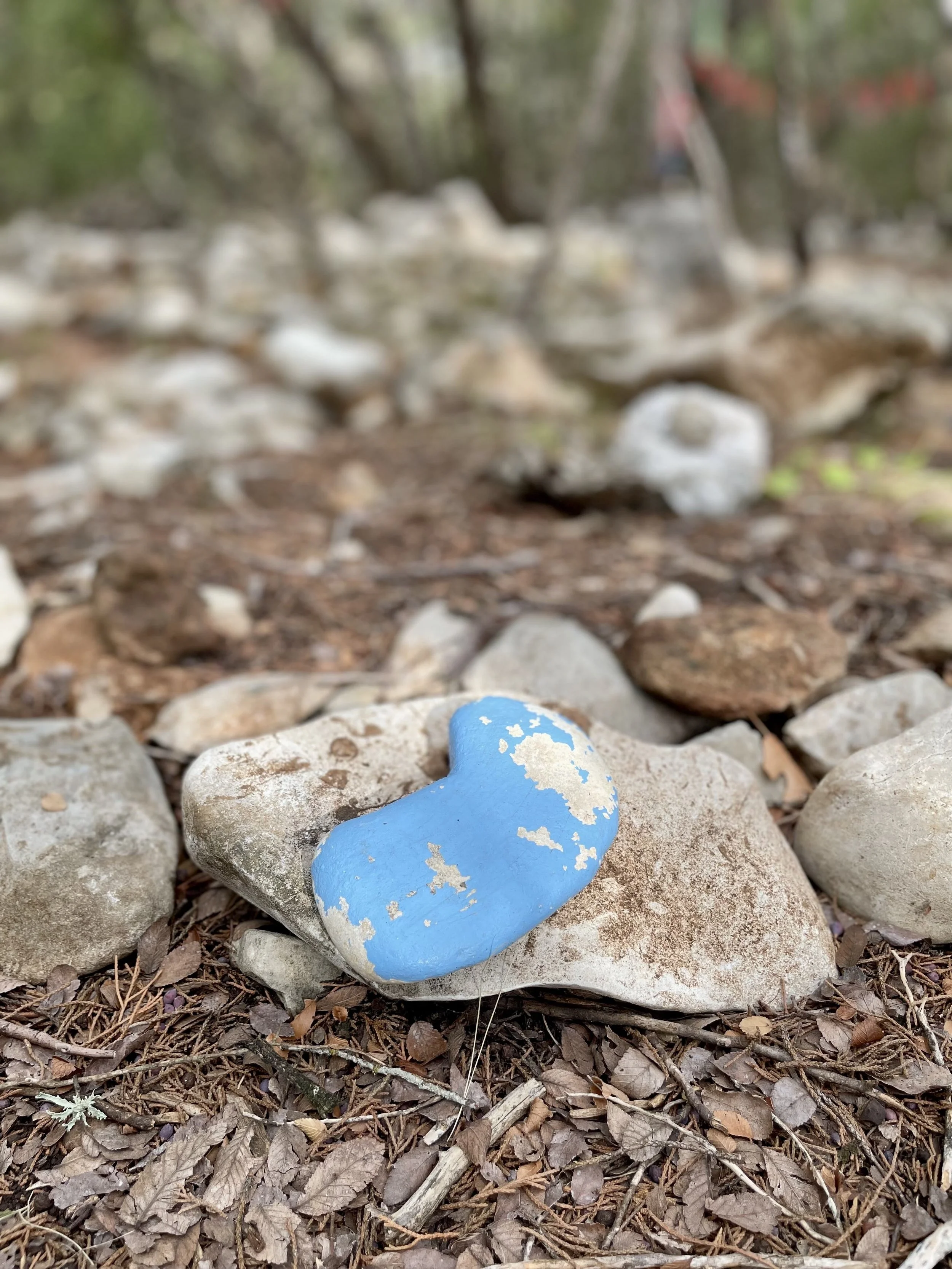
Photo by @thatguymateo.
Anybody else ever find yourself clinging too tightly to old ideas in the work? Or maybe to new ideas when it comes to writing goals (people we’d like to impress, deadlines we hope to meet, or money we’d like to make)?
In this episode, I talk about the need to let go in order to transform. While I never want to discourage anyone from visualizing their writing goals, if we focus too much on product—if we are clinging to the idea of how something will be consumed—we’re neglecting our materials, our characters, and our process. What if we were to let go of the idea of the future? What if we shed the need for anything beyond this moment? Could we make room for some major transformation?
The questions below are intended to be done twice, back-to-back if you have the luxury of time or on separate days if you’d like the extra guidance. On the first round, pose the questions to yourself, and on the second round, pose them to a character, either one who’s just wandered into your head, or somebody brand new. For the character, you can simply pose the question of what they may be clinging to, unless your character happens to be an artist, too!
Guided Writing: Once for you, once for a character…
Take a deep breath before you get started. Close your eyes for one minute. Thank yourself for taking this time. Thank the seeds for waking up, and the new green for showing up in the trees. Thank the space around you. Take another deep breath, and then proceed.
What in your process of creation do you feel yourself clinging to right now? It could be either an idea or element of that story you’re weaving (a scene, a character, or even a major event), or it could be an element related to process itself (the need to finish by a specific deadline, or the need to impress someone)? Write for 7 minutes here, without judgment, just letting yourself speak to the page about what you might be clinging to.
Now let’s do some wild imagining. I want you to visualize what it looks like to leave this thing behind; what is the chrysalis or shell or transformative home of your choice? What does this transformative shelter look like when you’ve finished with it? And the Part II to this—you probably saw this coming—what does the bird or butterfly look like when it takes flight? Take seven minutes for each—the shell and the transformed creature. Once you’ve let go, what is left behind, and what is made new? Tell the page about both.
With these last several minutes—4/5/6, whatever you have time for—consider a space where you feel able to tap into something bigger than yourself, a place where you are not needed and yet feel a part of the fabric of this place. This could be a forest where the tree roots have tangled underground long before you ever walked this path, or an art gallery where the pieces on the wall speak to you, even though you had nothing to do with their making. The idea here is to think of a place where you feel connected and powerful, yet small and insignificant—a wild combo! Take a moment to jot down some ideas about this place and how you can visit in the coming days. The idea here is that when we feel small yet extremely connected, we let go a little. Breath by breath, step by step, word by word.
Finally, one last breath. Thank yourself again for taking this time. Thank the space around you. Thank the sun and the rain. Thank your mind and all its storytelling layers.
Want weekly writing prompts? Follow @bluestonewriters on Instagram for weekly Writing Pauses, dropped each week to invite you to pause…write…breathe.

True healing is not the fixing of the broken, but the rediscovery of the unbroken. -Jeff Foster
I quoted author Rebekah Manley—who requested this card for the podcast—because I love what she has to say re: patience and self-compassion for the creative soul and the creative process (and how this aligns with Queen of Cups). “Sometimes you don’t feel like building your cup at all,” says Bekah. “Some days you feel like throwing it at the door and watching it crumble…but building your own cup can make you strong.”
Bekah says that by the time you’re ready to fashion it as a whole, “Maybe a few drops of those tears will go into that cup, maybe it will just be a memory…” But it’s okay to start. “It’s okay to start to build that blueprint,” she says, even if you’re not quite out of the anger stage and not ready to build out of love.
I’ve created some new guided writing inspired by the episode to prep you for the free Word Search session on February 8th, or to enjoy any ol time you find this post waiting for you and your writing life.
Guided Writing to Let Go With Love
Take a deep breath before you get started. Close your eyes for one minute. Thank yourself for taking this time. Thank the frost for settling in and the sun for melting it away. Thank the space around you. Take another deep breath, and then proceed.
What does it look and feel like when you create out of love, for the work and for yourself? Feel free to imagine all the possibilities here. You can include how/where you’re writing or making, as well as what exists in the immediate environment to aid in that beautiful mood (tea, snacks, pets, fancy pens, etc.) Write for seven minutes.
If you were to meet your main character—or your research subject, weaving, painting, or pottery—on an island, how would the two of you sit together and what would the water look like? Write for eight minutes.
If you were to release your heartbreak/feelings of rejection into the water, what shape would it take, and how would it sail away and/or sink? How would you bid it farewell? Write for seven minutes, describing what you hold and how you let it go.
For three final minutes, take stock. When does the work love you back? When do you feel embraced by the writing, the art, the music, the making? Take three minutes, or as long as you like.
Finally, one last breath. Thank yourself again for taking this time. Thank the space around you. Thank the cold and the heat. Thank your mind and all its storytelling layers.
Want weekly writing prompts? Follow @bluestonewriters on Instagram for Monday Writing Pauses, dropped each week to invite you to pause…write…breathe.

I love the solstices as a time to reflect on what we’ve been up to and how that’s going to change in the coming six months, particularly for the creative life. It gives us a chance to set intentions for our writing process and also our works-in-progress: What characters/themes/places/emotions have we neglected or felt uneasy to explore? Can the growing light in our hemisphere inspire us to engage with these hidden corners that have fallen into shadow? Can it illuminate something in our own creative life that has been wanting to come forward—the need to try out a new medium, find a writers group, or experiment with a new tool for the daily/weekly process?
In our stories, as in our lives, we’re always navigating a balance between so-called light and dark. The prompts below will guide you to create new material (or revise existing work) by using these themes as well as set some intentions for your process in this coming six months of the growing light.
Guided Writing to Illuminate Possibilities
Take a deep breath before you get started. Close your eyes for one minute. Thank yourself for taking this time. Thank the sun for rising, and the moon for shifting shape. Thank the space around you. Take another deep breath, and then proceed.
Think on a place that feels full of light—either in your work-in-progress, in your real life, or in a world you’re looking to dive into for a new story. What does it feel like to be in this place, for you or your character? Write for five minutes, allowing yourself to engage with all five senses in this light-filled space.
Now, consider a theme/character/place in your story—or one that’s been hanging out in your imagination lately, trying to talk to you—that you haven’t wanted to engage with because it feels too dark. Too thorny. It feels shadowy and has lived in shadow. Write for five minutes, reflecting on WHY you don’t want to have a conversation with this theme or this character (or this real person, for the memoir writers among us). Allow yourself to speak freely here.
Now. We’re going to combine the two previous exercises; this is pure experimentation here. It might be weird. Invite your theme/character/place into the light-filled space. You can do this by dropping the character into this space and letting them hang out there, or by allowing the theme to weave into the place through a symbol, natural element, or even a new character. This is truly speculative thinking, and this is where you turn off your adult brain that tells you you have to get something “right” and turn on the malleable child brain that is willing to break things to find out what’s inside. Write for nine minute, allowing this interplay between light and dark, and allowing things to take new shapes as they enter new spaces, to be changed by the changing light.
Alright. Deep breath. What is being illuminated here, for your work and your writing process? How do you want to work in the coming half-year? What elements of your process do you want to keep alive, and which do you want to let go? Allow this time of shifting light to inspire your own subtle or dramatic shifts in process. Write for six minutes, jotting down ideas for your coming six-month timeline of the creative life.
Finally, one last breath. Thank yourself again for taking this time. Thank the space around you. Thank the shifting light. Let the work grow with you and change as the light grows and changes.
Want weekly writing prompts? Follow @bluestonewriters on Instagram for Monday Writing Pauses, dropped each week to invite you to pause…write…breathe.
As this summer draws to a close, students are returning to classrooms, a few sleepy leaves are beginning to fall, and my time as a regular contributor to this blog is coming to an end. It has been a WONDERFUL few months of working closely with our lovely Claire and getting to know many of you through classes and the Apprenticeship Mentoring Sale, and I hope to keep seeing you in the months ahead! Many thanks for all your kind thoughts and words as we move into this new season together.
Farewells are often filled with different emotions that can feel confusingly inextricable, like grief, excitement, anxiety, and hope. These goodbyes invite breaks in the narrative that can serve as useful times of change and evolution, pointing our characters in fresh directions to move the plot forward. Without goodbyes, there are no stakes in the game, and our characters could never grow into the complex people we know them to be.
Goodbyes are chances to shake off lingering attitudes or habits that no longer serve our characters and offer them a kind of rebirth into an ever-changing world. With this week’s prompts, I encourage you to think about the things your character is ready to leave behind and about the opportunities that new space affords them.

Where is a farewell leading your character?
First things first, consider a time you said goodbye to something in the last month. This could be big, like a relationship, or small, like a lost pen. Whatever the subject of your farewell, think about the space it left behind and how you have filled it. Have you taken more time for yourself, found a replacement, or realized you never needed it at all? Write for twelve minutes.
Transitioning into our characters’ lives, think back to a time your character said goodbye to something in their childhood. Perhaps they lost a favorite toy, moved houses, or had a falling out with a friend. Settle into the grief of that farewell and the gap it left open. Feel how it affects their very body and consumes their thoughts, for however long a time, and write for six minutes.
In the present day, how does your character remember that childhood goodbye? Do they remember it at all? Maybe the grief has faded to a dull ache, felt only on dark and silent nights, or maybe they realized that farewell was for the best, however much it hurt at the time. Perhaps they even celebrate that once grief-laden moment, privy to some new secret that turned their memory on its head. Write for seven minutes.
Now, I invite you to consider what your character is most afraid of losing. To what person, idea, or item does your character utterly refuse to say goodbye? Sink into the emotion, whether it be love, obsession, or something else, that connects your character to the thing they fear losing so much that they’re not sure where their identity ends and that thing begins. Now, take it away. Write for ten minutes.
Okay, that last one was kind of mean. Sorryyyy. As a balm, think of something your character IS ready to let go of, something that no longer serves them. Maybe they have outgrown a toxic family member, are ready to graduate from school, or need to let go of a harmful memory that haunts them at night. Catch your character in a moment of self-awareness, whether alone or with another character, and allow them to say goodbye. Write for eight minutes.

How did it go? Did you dig it? Subscribe to The Fool & the Page for more guided writing and cosmic conversation.
KAY TEEKELL is Claire’s Summer Communications Associate and fellow creative writer. She has five years of writing and editing experience that ranges from content writing for blogs and magazines to grant writing for nonprofit organizations. Kay is passionate about the power of storytelling and strives to amplify voices that might otherwise be forgotten. She is excited to use her artistic and literary skills in her professional aspirations and will continue to develop her talents for the rest of her life.